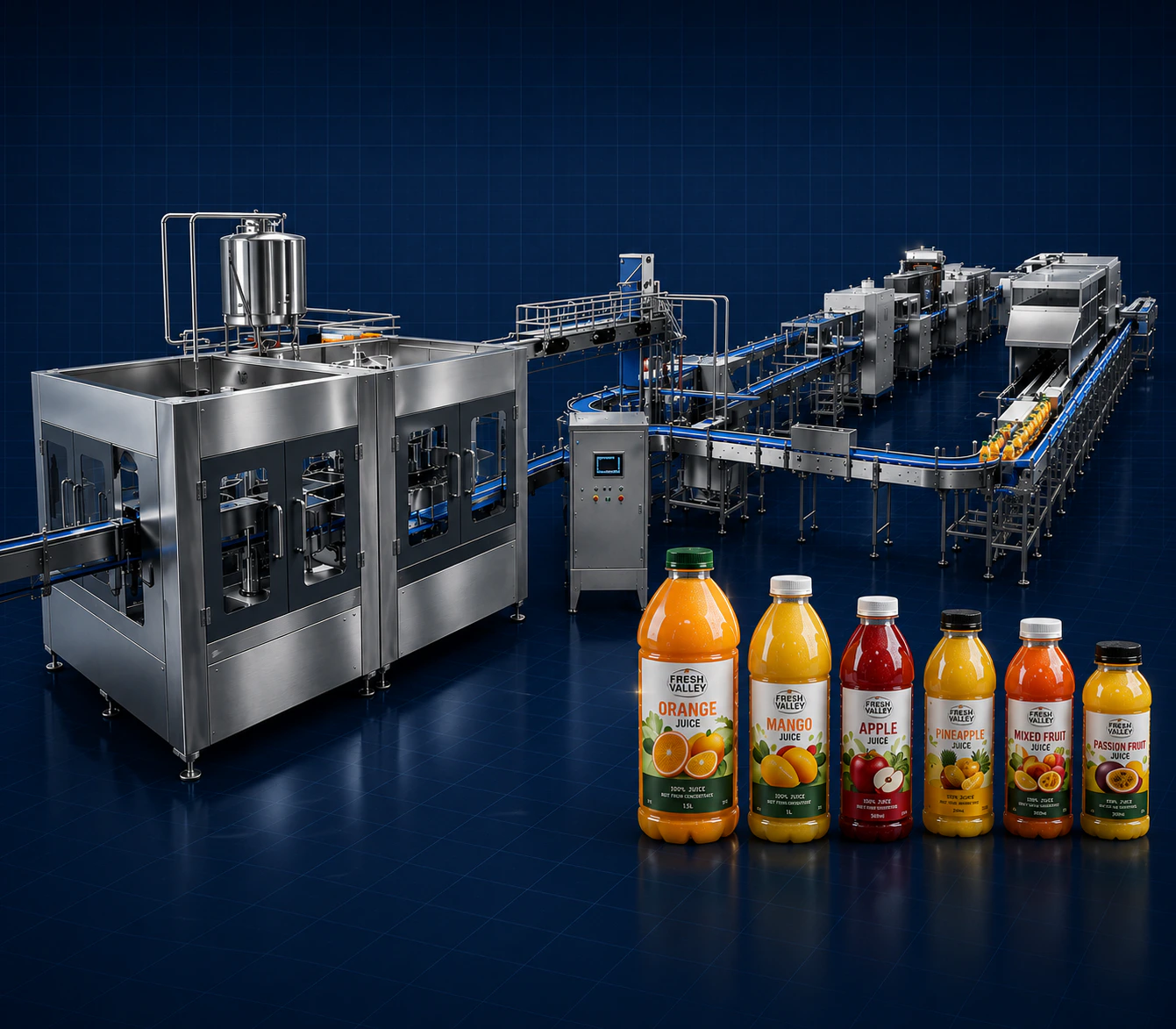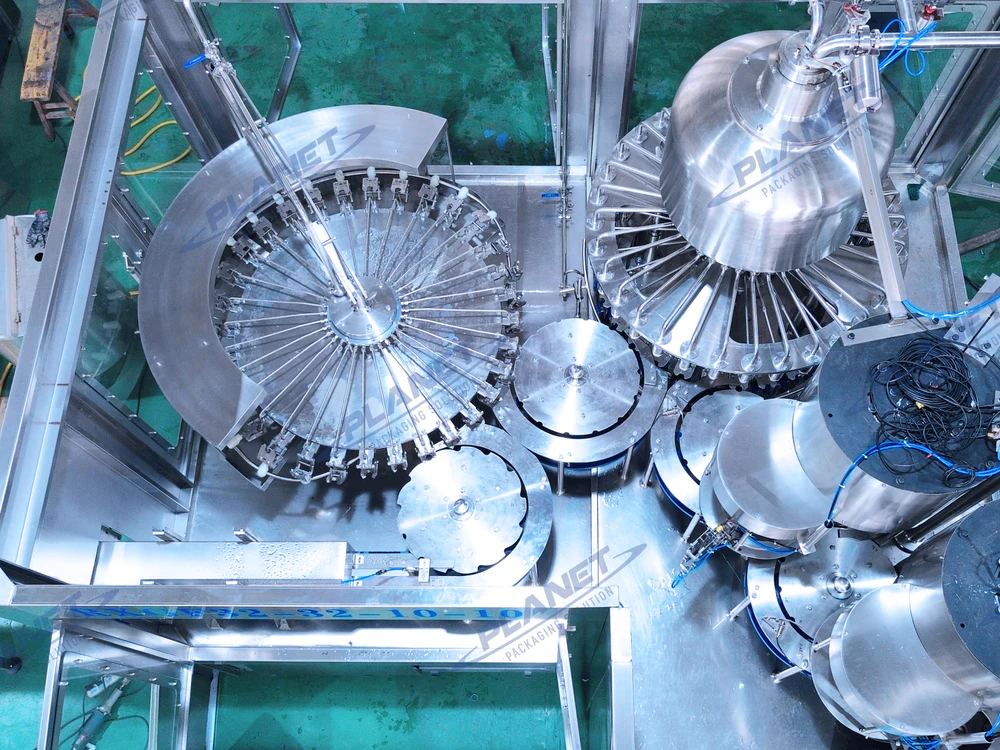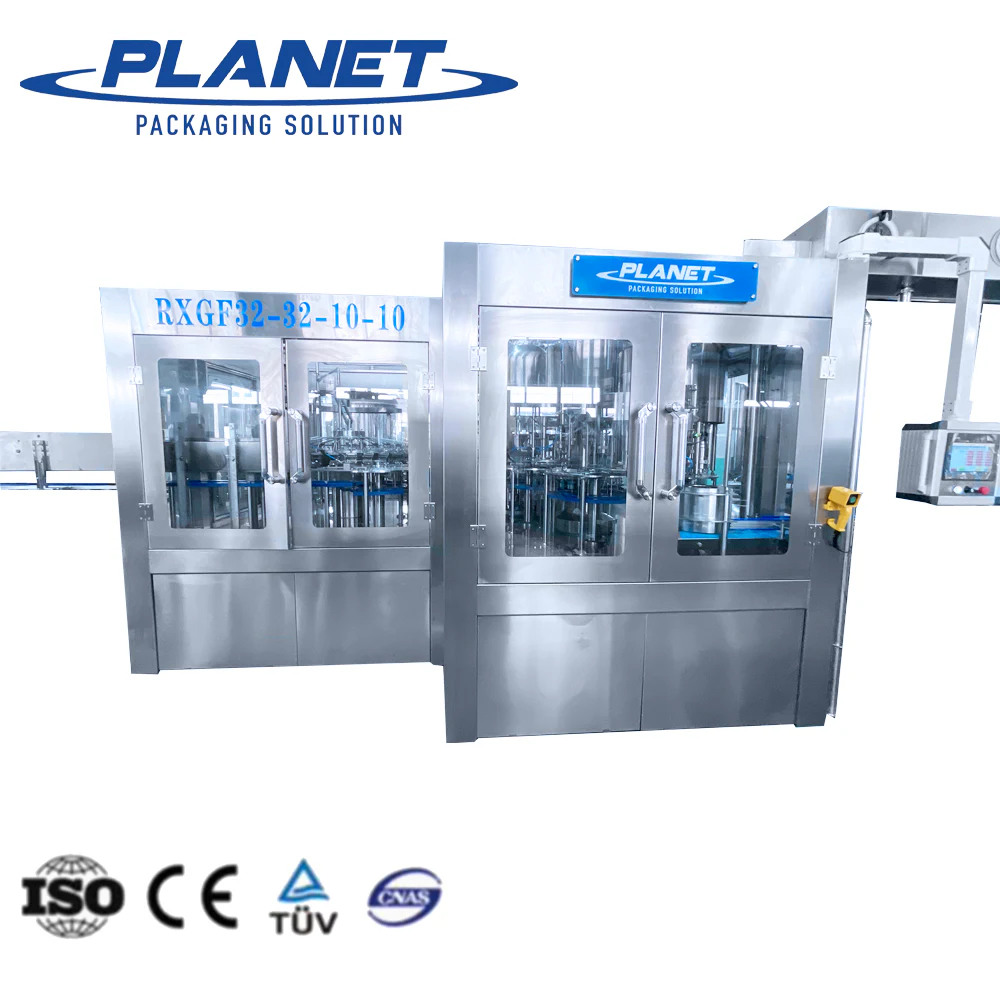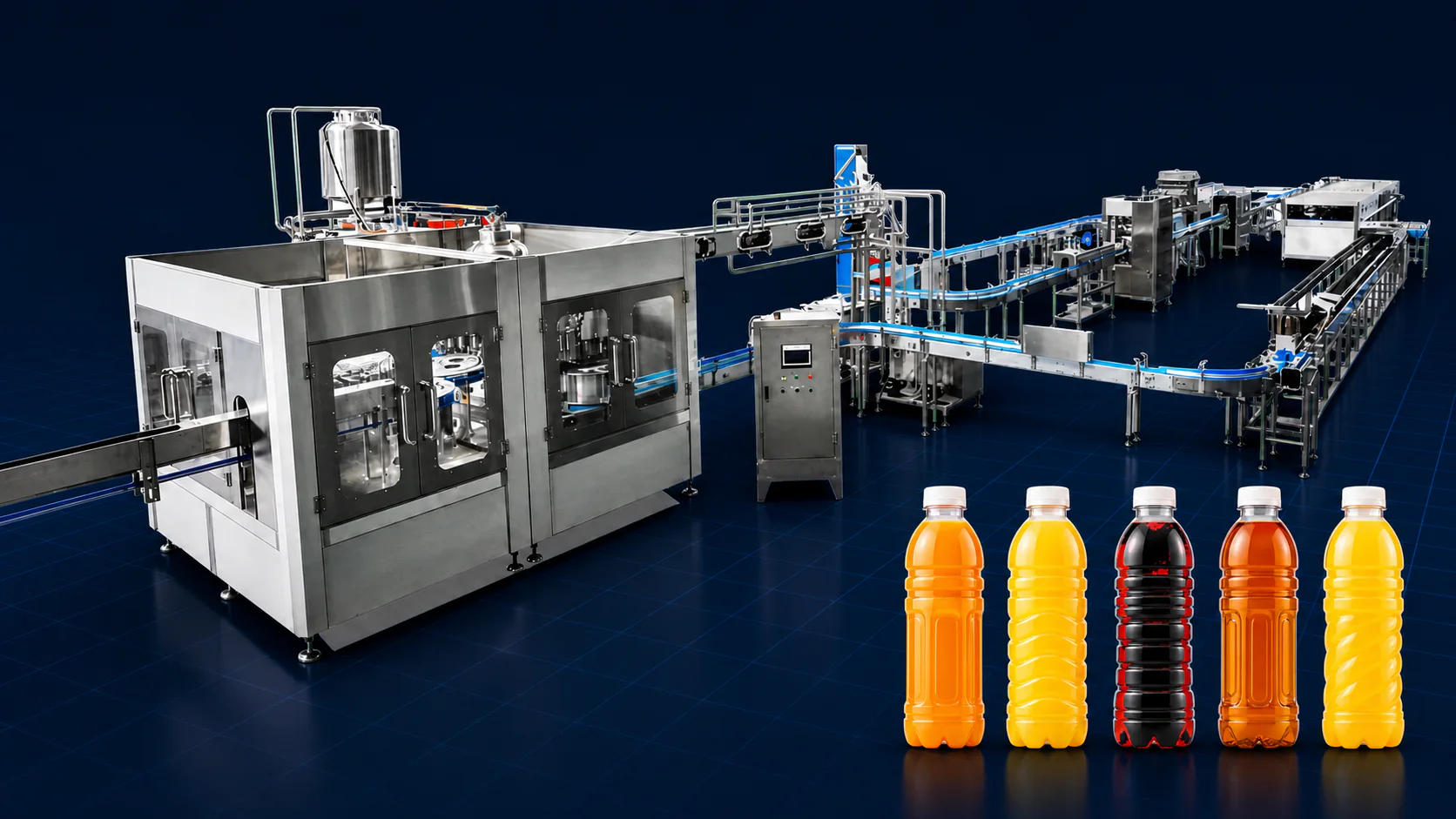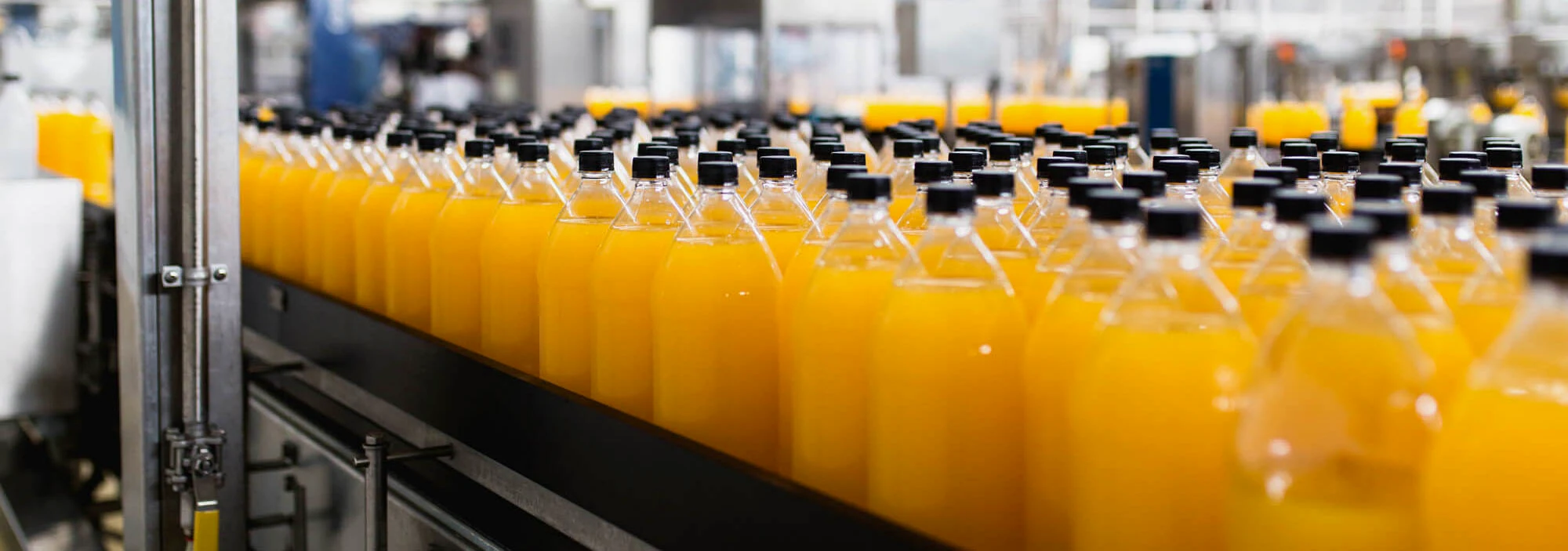
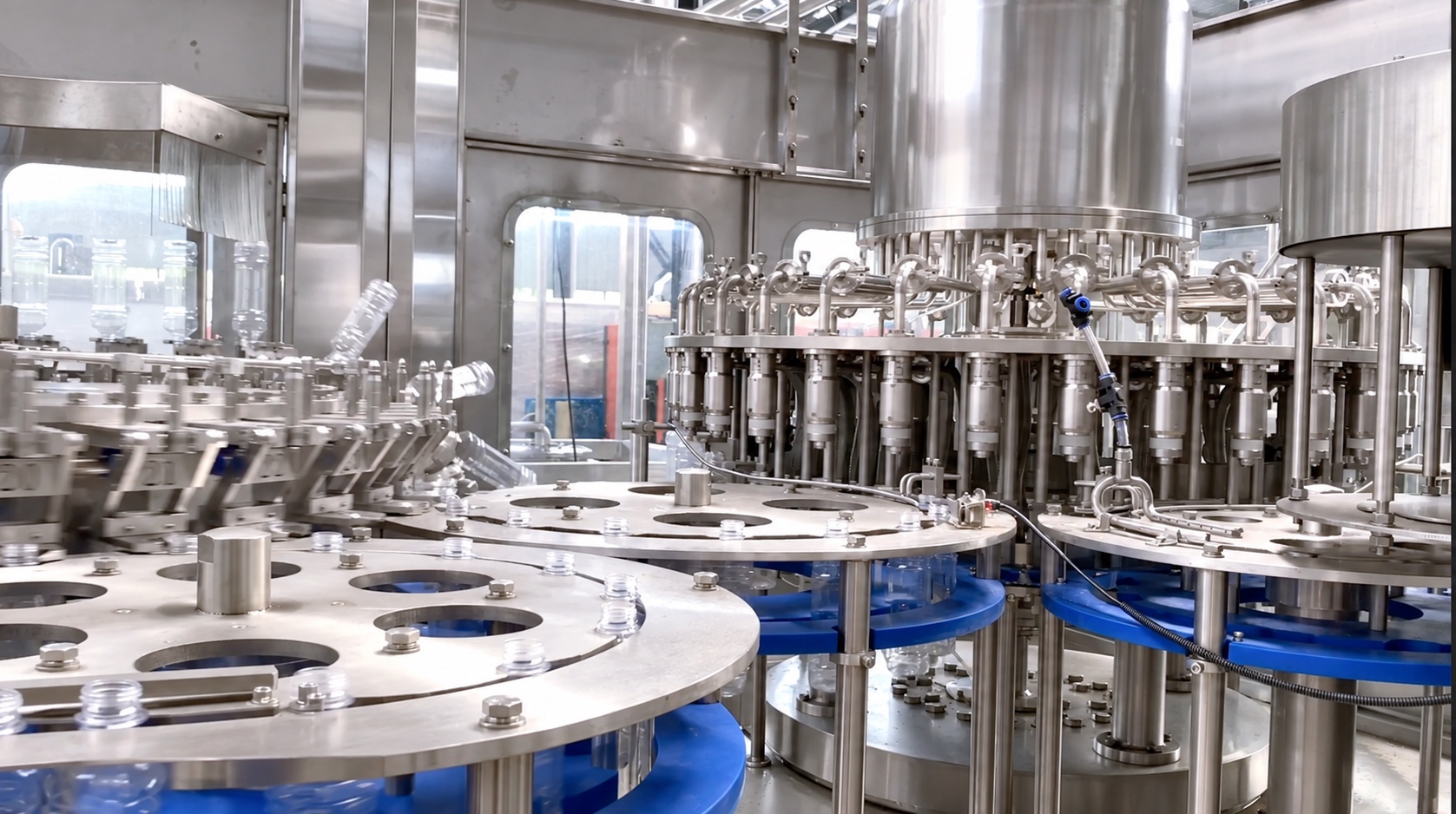
Orange juice bottles moving along a conveyor inside an automated beverage filling plant

Turnkey juice & tea filling solutions

Build the process around
your finished drink.

Connect water treatment, recipe preparation, thermal processing, filling, cooling and packing around the product condition and shelf life you need.

Choose your preservation route

Start with the product.

Recipe, acidity, particles, filling temperature and shelf-life target determine the process before they determine the machine.

Heat-resistant PET · 100–2,000 mL

PET hot-fill juice line

A proven route for juice, nectar and ready-to-drink tea, connecting preparation, thermal treatment, hot filling, bottle cooling and final packing.

Reference output
2,000–28,000
BPH
View this route
Aseptic PET · ambient distribution

PET aseptic juice line

For products that need a sterile filling environment and tightly controlled product, bottle and closure sterilization around the validated process.

Reference output
Project-specific
ENGINEERING BASIS
View this route

Published hot-fill output uses the RCGF model table as its reference basis. Final capacity follows the confirmed product and package.

Complete line scope

One recipe.
Two preservation routes.

Switch routes to see where hot filling and aseptic production place different demands on thermal processing, package preparation and filling control.

Thermal route · heat-resistant PET

Prepare, heat, fill, then cool the bottle.

The hot-fill route coordinates recipe preparation, thermal treatment and filling temperature with a heat-resistant bottle, closure and controlled cooling profile.

  1. 01
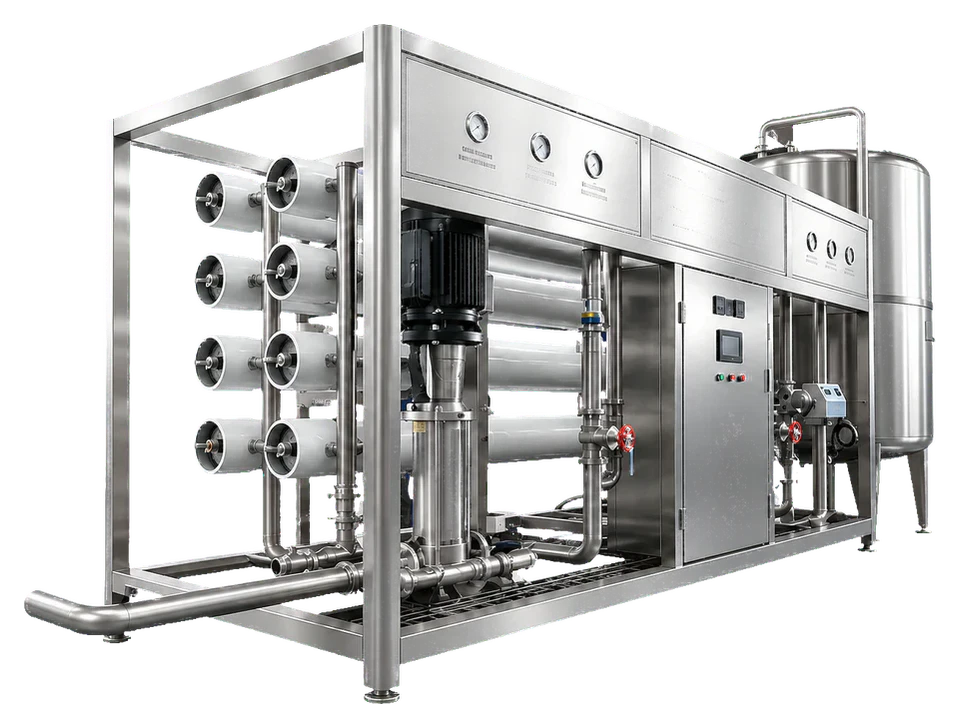
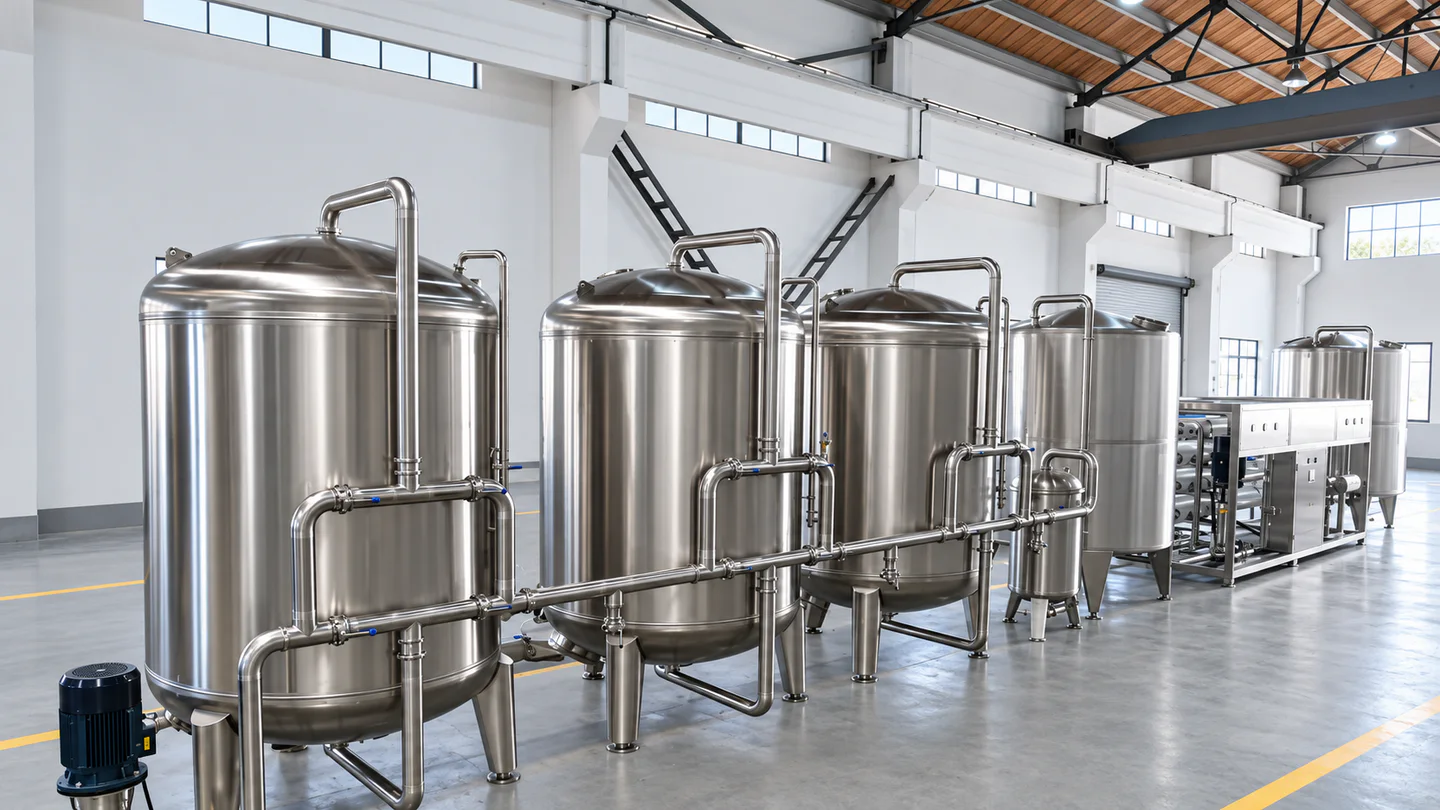
    Water treatment filtration and purification equipment
    Water treatment
  2. 02
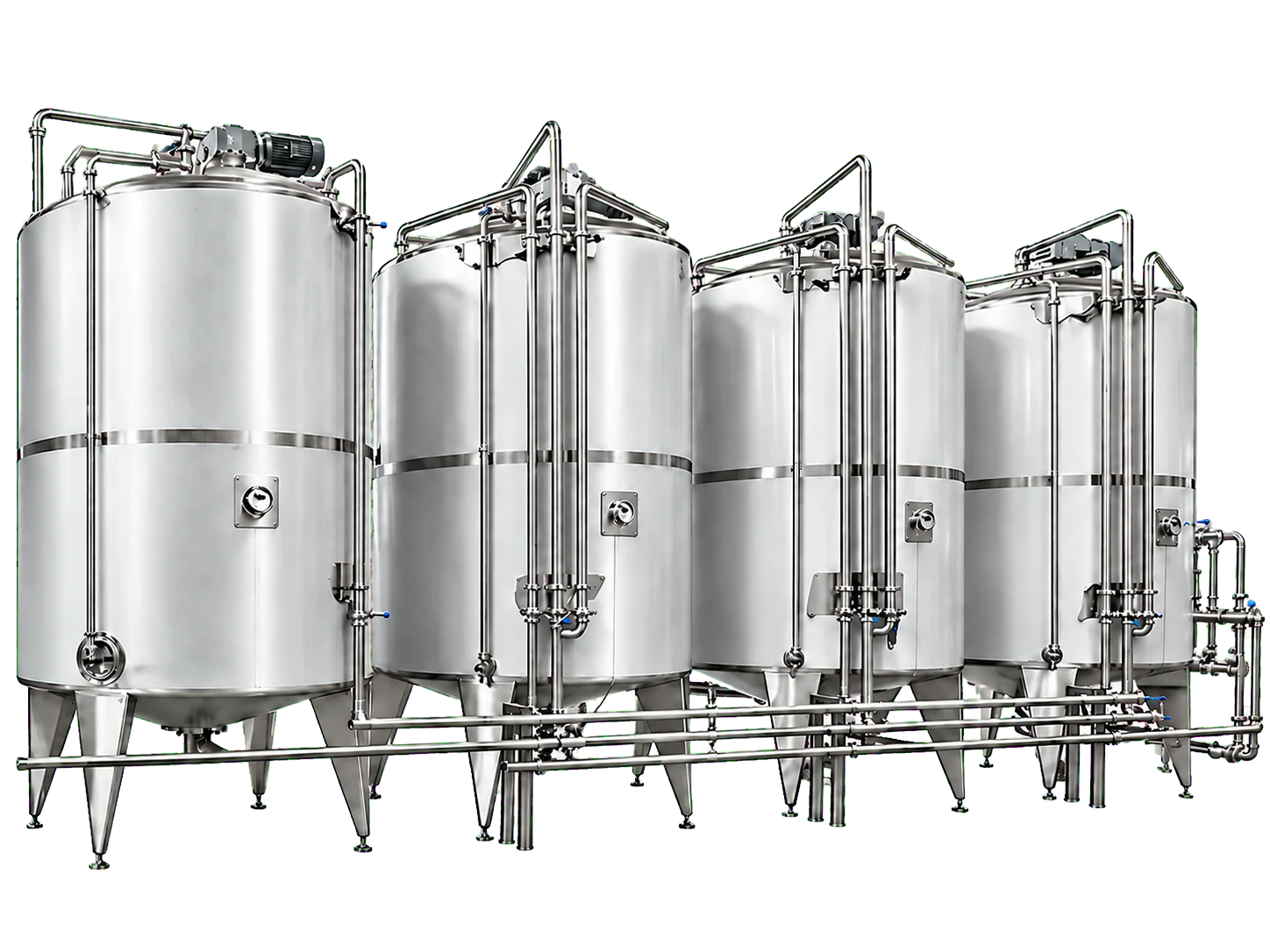
    Stainless-steel syrup blending and storage tanks
    Syrup & blending
  3. 03
    Stainless-steel hot-fill product tank and processing equipment
    Thermal treatment
  4. 04
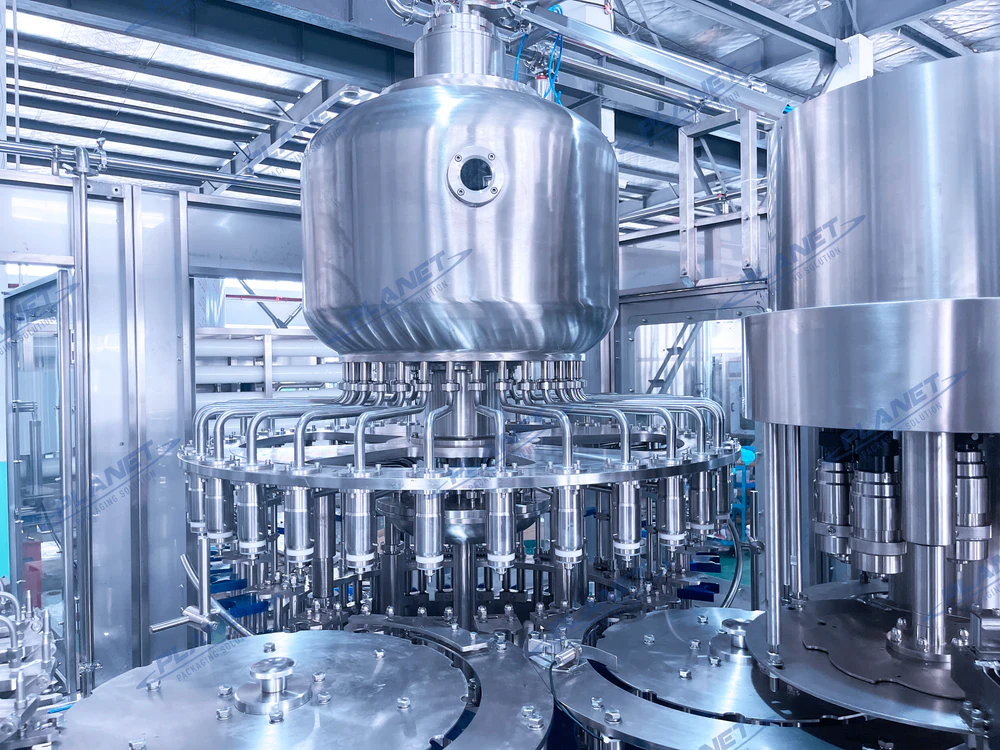
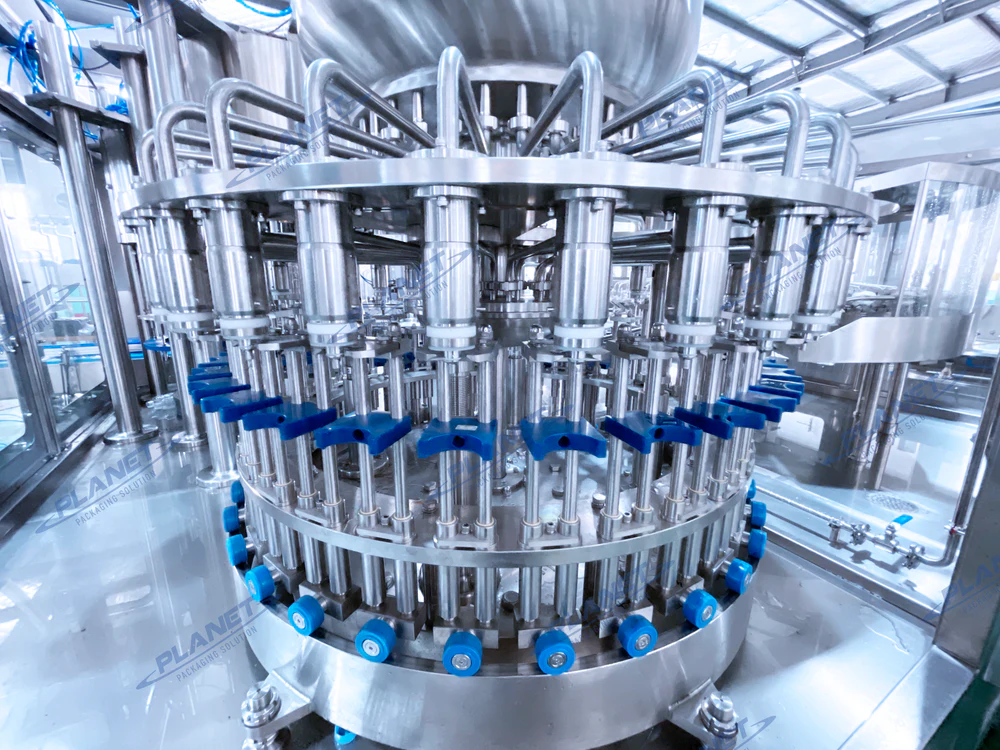
    Close view of the rotary hot-fill valve carousel
    Hot fill & cap
  5. 05
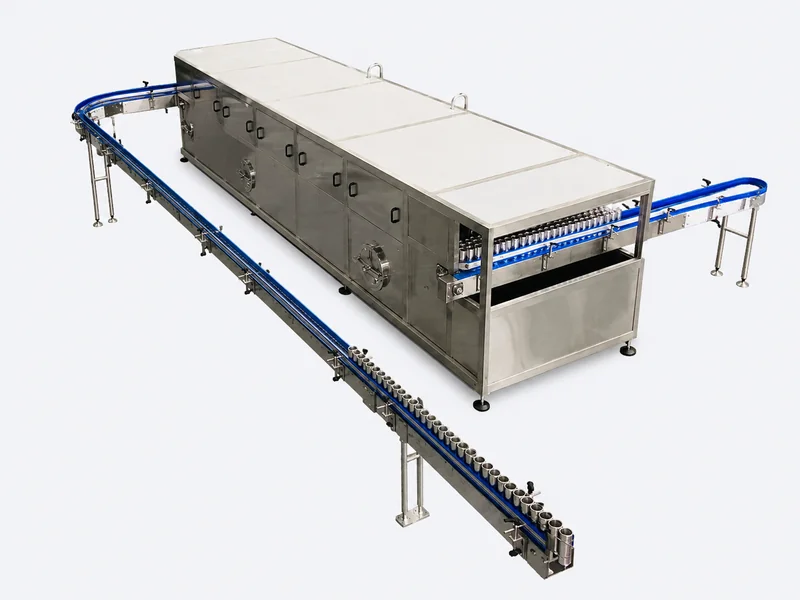
    Stainless-steel bottle cooling tunnel with conveyors
    Bottle cooling
  6. 06
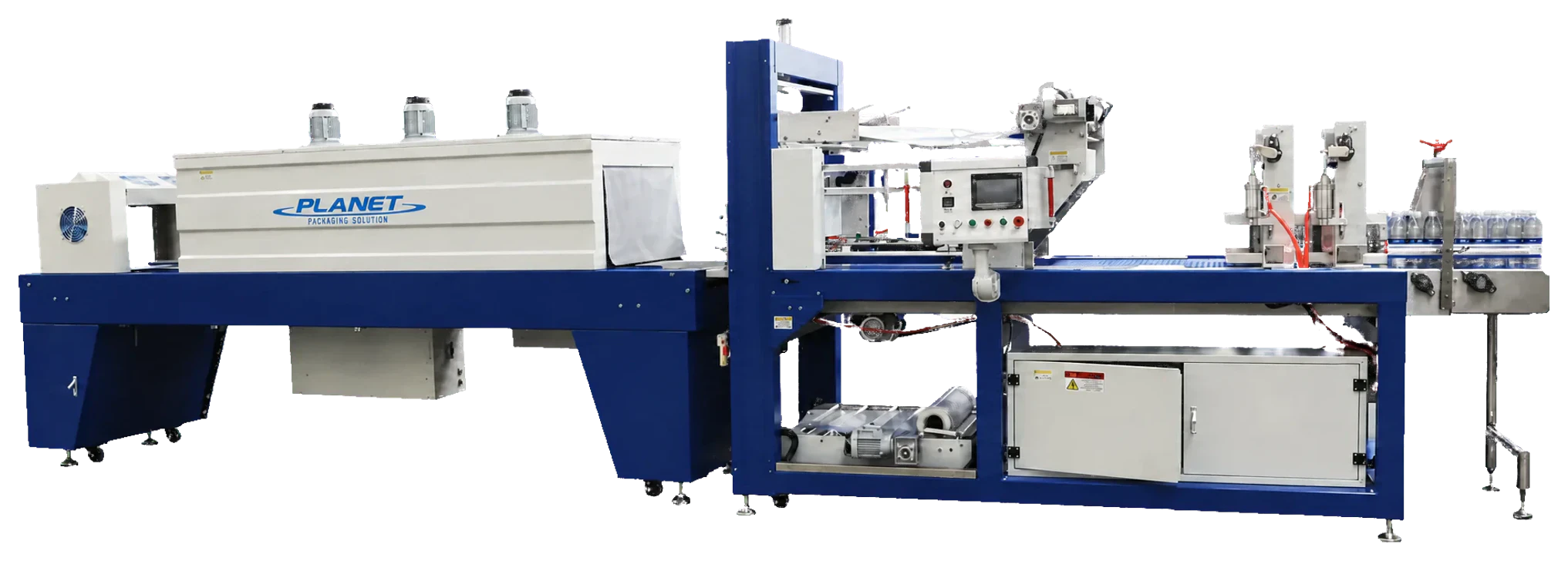
    Automatic secondary packaging machine for finished beverage bottles
    Label & pack

Define the product

What will your
finished drink be?

Product composition changes preparation, thermal treatment and filler design. Choose the closest profile, then confirm the actual recipe during engineering.

Four typical beverage profiles

Product images illustrate common formats. Final processing conditions follow the approved recipe, package and local requirements.

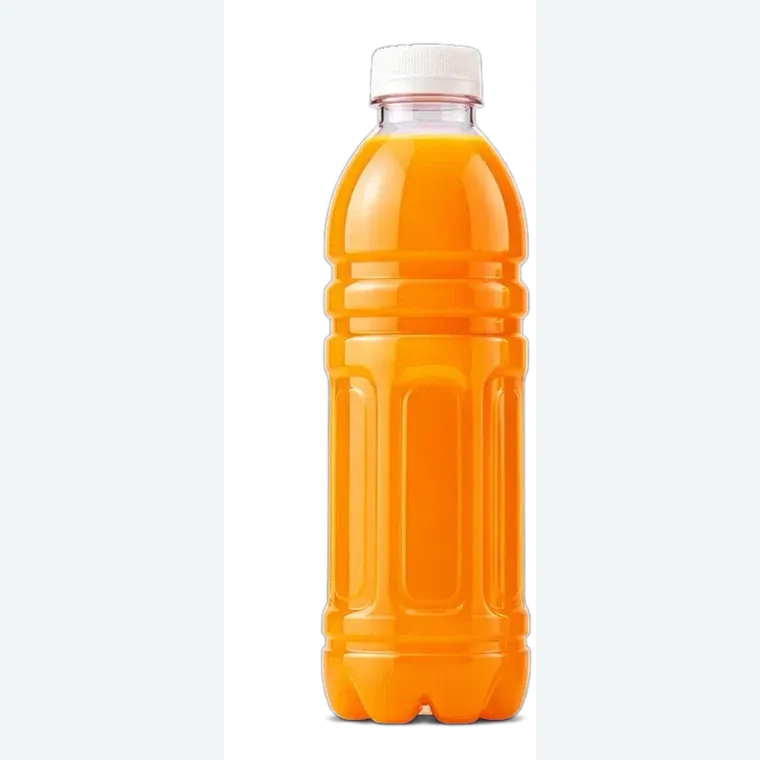
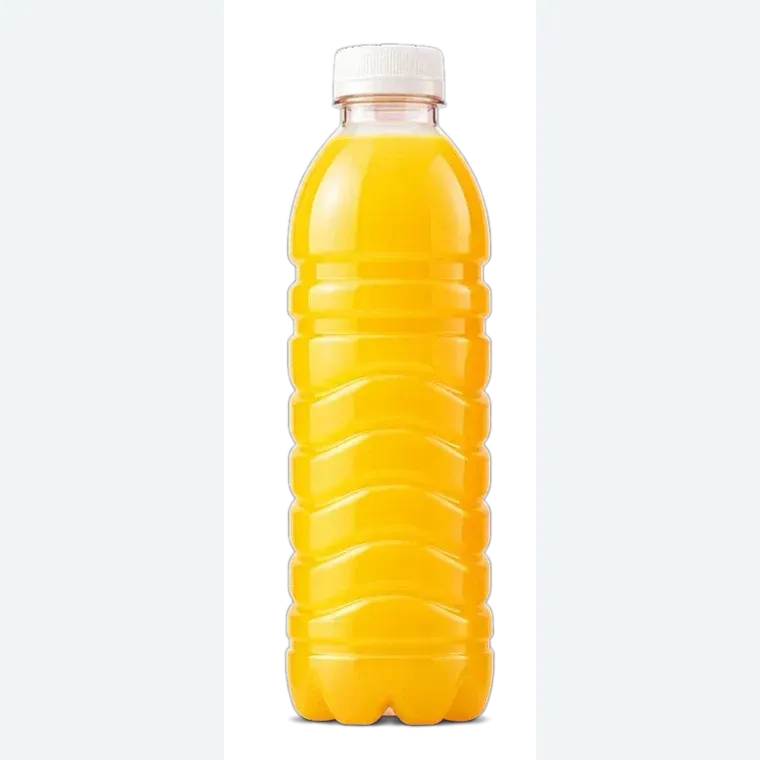
Unbranded bottle illustrating fruit juice drinks
01Clear or low-pulp

Fruit juice drinks

Single-fruit or blended juice beverages planned around acidity, oxygen exposure, flavour retention and target shelf life.

Review · recipe + deaeration + thermal profile
Unbranded bottle illustrating nectar & pulp drinks
02Pulp or fibre

Nectar & pulp drinks

Higher-viscosity recipes require the pulp size, suspension behaviour and product path to be reviewed with the filling valve.

Review · particle size + viscosity + valve path
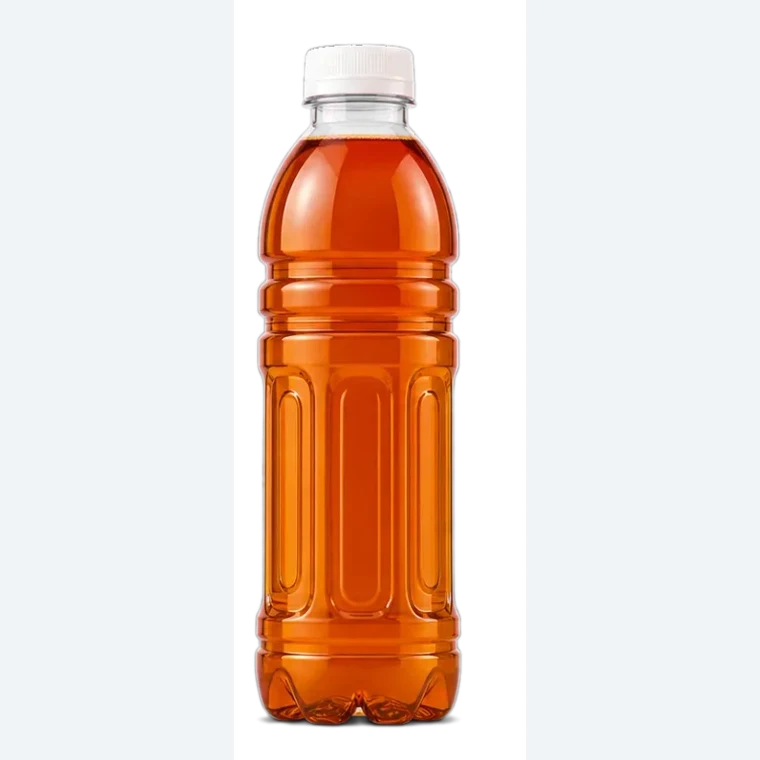
Unbranded bottle illustrating tea beverages
03Ready to drink

Tea beverages

Tea extraction or concentrate blending is coordinated with filtration, temperature control and oxygen management before filling.

Review · extraction + filtration + oxidation control
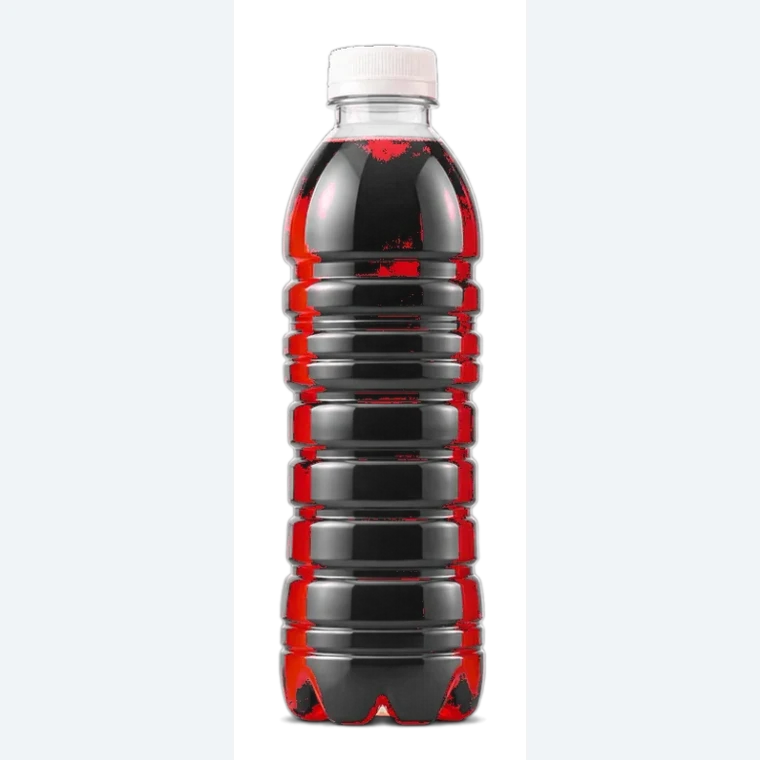
Unbranded bottle illustrating functional drinks
04Formulated beverage

Functional drinks

Energy and fortified beverages need controlled ingredient dosing, complete dissolution and repeatable batch preparation.

Review · dosing + blending + product stability

Have a recipe, bottle and shelf-life target?

Discuss your beverage

Juice line FAQ

Questions before
you plan the line.

Start with the product and shelf-life target. These answers clarify the information needed for a useful line proposal.

01What information starts a juice-line proposal?

Share the recipe or product specification, pH, pulp or fibre details, required shelf life, bottle and closure drawings, target output, pack format and factory layout. These inputs define the preparation, thermal process and filling route.

02How do I choose between hot fill and aseptic filling?

The choice follows the product, package, distribution conditions and shelf-life target. Hot fill relies on a validated filling temperature and heat-resistant package followed by controlled cooling. Aseptic filling requires a validated sterile boundary for the product, package, closure and filling environment.

03Can the line handle juice with pulp or particles?

Yes, when the particle size, concentration, viscosity and suspension behaviour are confirmed before valve and product-path selection. Samples and an approved recipe should be reviewed during engineering.

04What bottle information is required?

Provide bottle volume, diameter, height, neck finish, closure and a drawing or physical sample. Heat-resistant PET behaviour and vacuum-panel design must also be reviewed for a hot-fill project.

05Is 2,000–28,000 BPH the output of every hot-fill line?

No. It is the manufacturer-published RCGF model range for the stated reference conditions. Final output depends on bottle size, recipe, filling temperature, valve configuration, changeovers and downstream equipment.

06What can Planet include beyond the filler?

The complete scope can include water treatment, syrup preparation, blending, homogenization, thermal treatment, bottle blowing, filling and capping, cooling, inspection, labeling, packing, palletizing and line integration.

Start a project

Bring us the product,
package and output.

Send us the product, package format and target output. We return a line configuration and budgetary quote.

Response time
≤ 24 h
Deliverable
Layout + budgetary quote
NDA
Available on request
Line inquiryEngineering response within 24 h