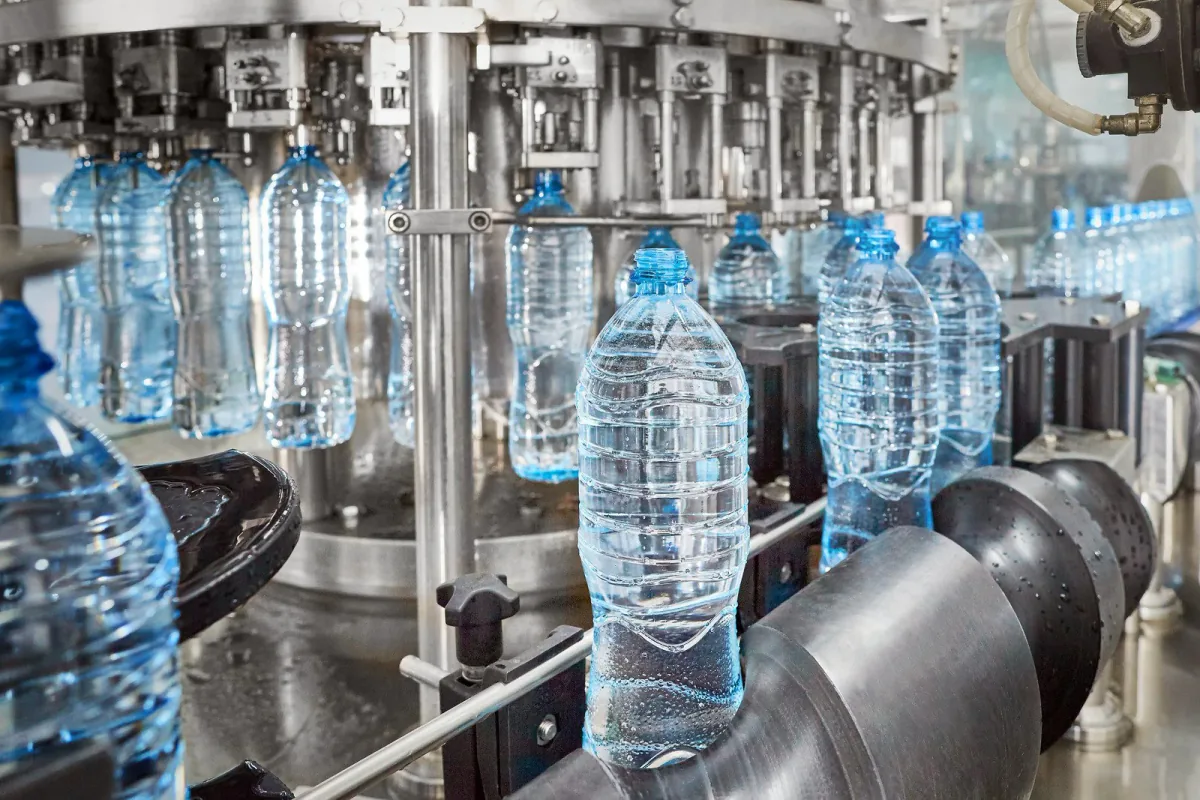
Clean, refill and return every bottle with control.
Build the line around incoming bottle condition, required hygiene, cap format and saleable output. The route separates dirty-container handling from the clean filling zone and keeps each transfer balanced.
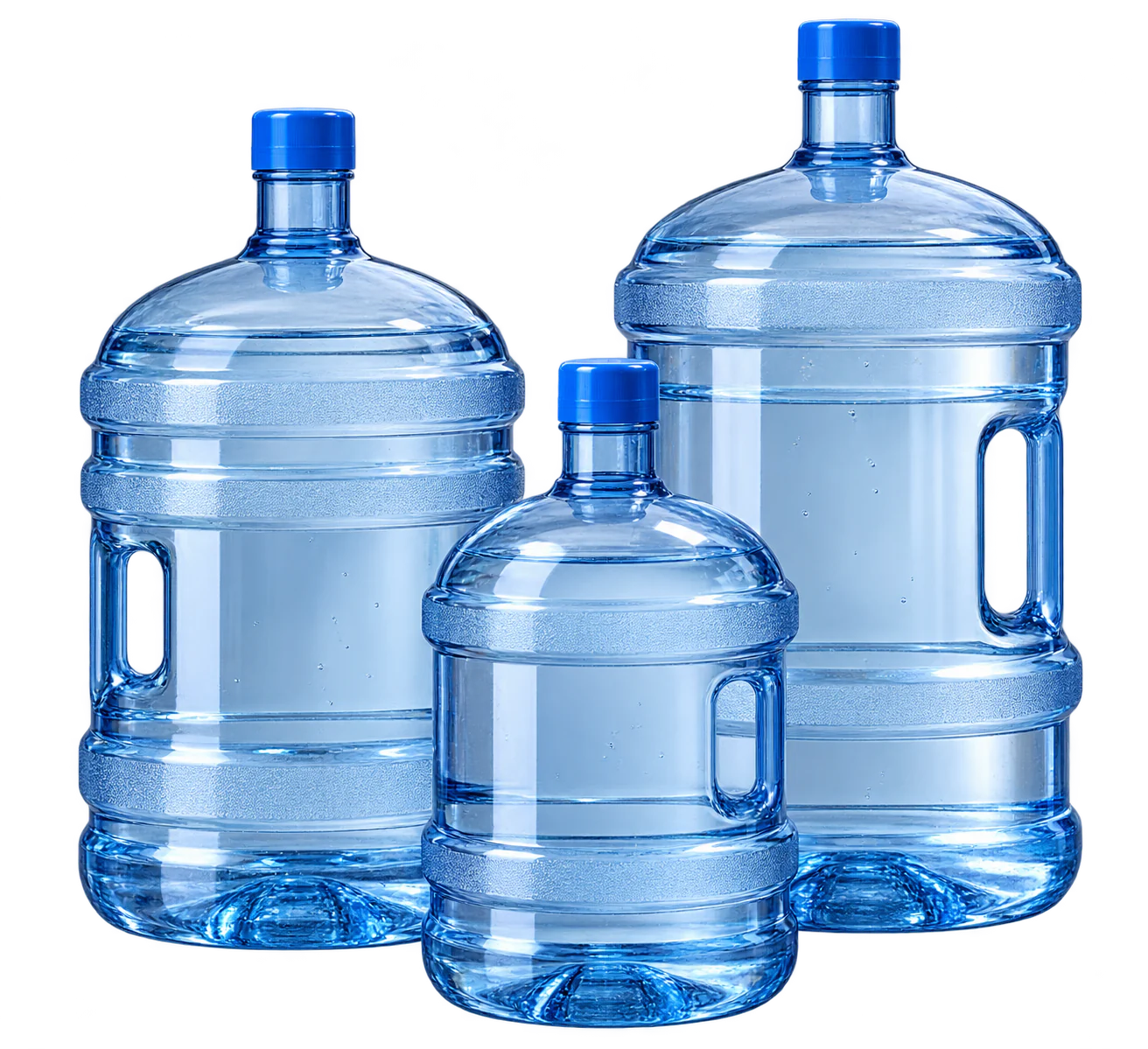
Bottle3–5 gallon returnable
WaterPurified · mineral · drinking
OutputConfirmed by bottle condition
Production walkthrough
Watch the returnable-bottle route.
The supplied 1,200 BPH factory footage covers the physical bottle route. A trimmed YouTube master will replace this preview while the poster remains locally optimized for fast loading.
YouTube master pending
Key features
Designed for the returnable-bottle cycle.
Each machine prepares, cleans, fills or protects the returnable bottle before the next production handoff.
01
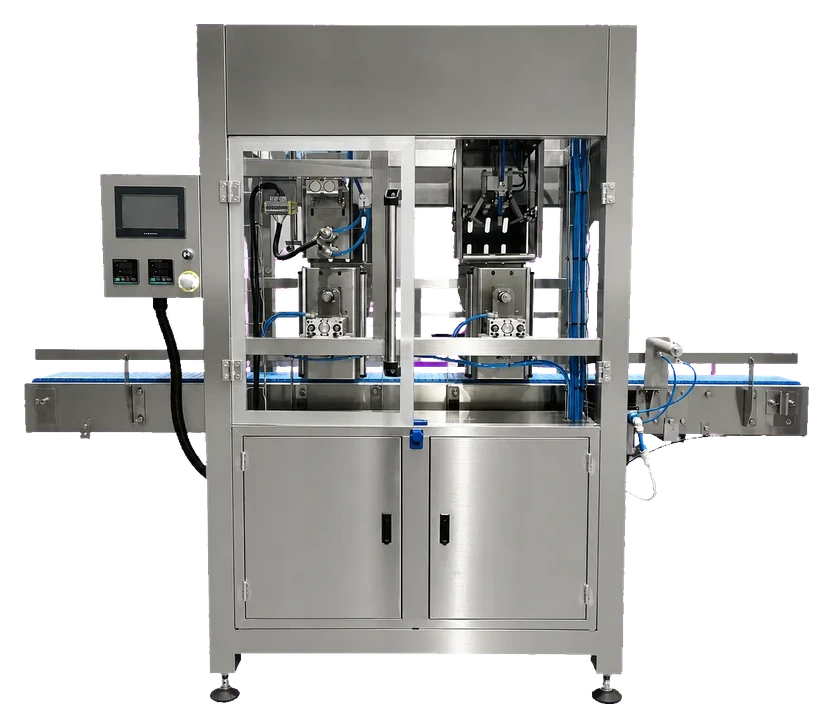
Cap-label cutting and cap remover
The overall unit is made of high-quality 304 SUS stainless steel, which is corrosion-resistant and easy to clean. The cylinders and electrical components are all products from well-known domestic and international brands, including Airtac, Siemens and Schneider.
02
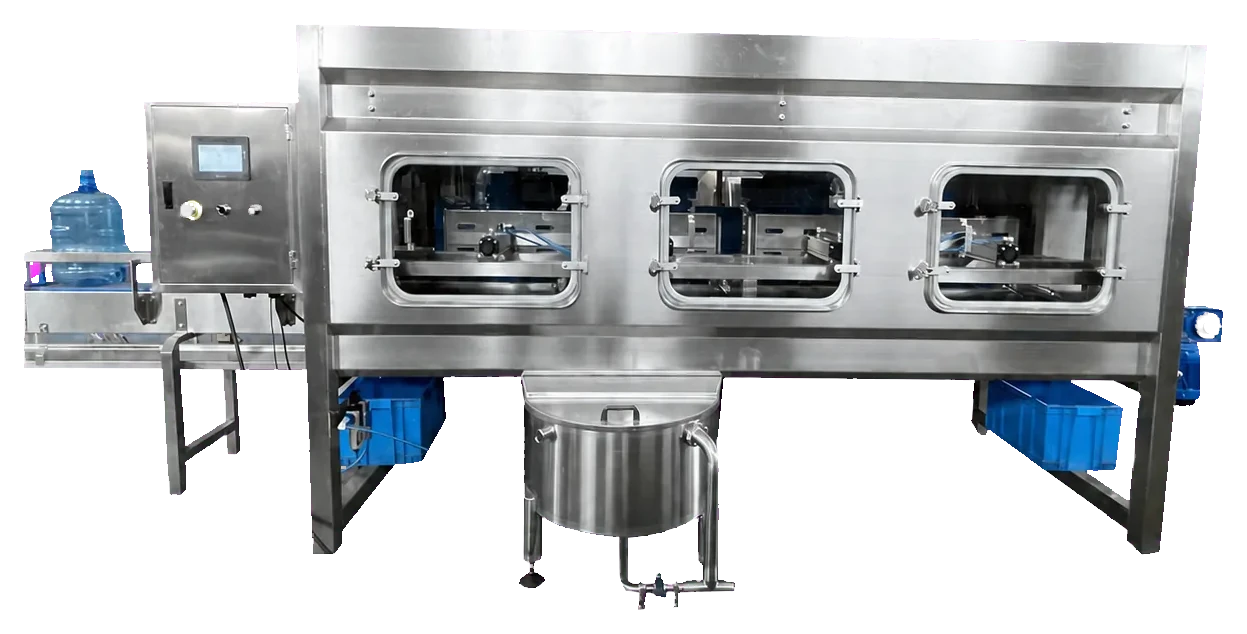
Outside brusher
The overall unit is made of high-quality stainless steel, which is corrosion-resistant and easy to clean. The PLC uses the Mitsubishi series from Japan, and the AC contactor uses Siemens components.
03
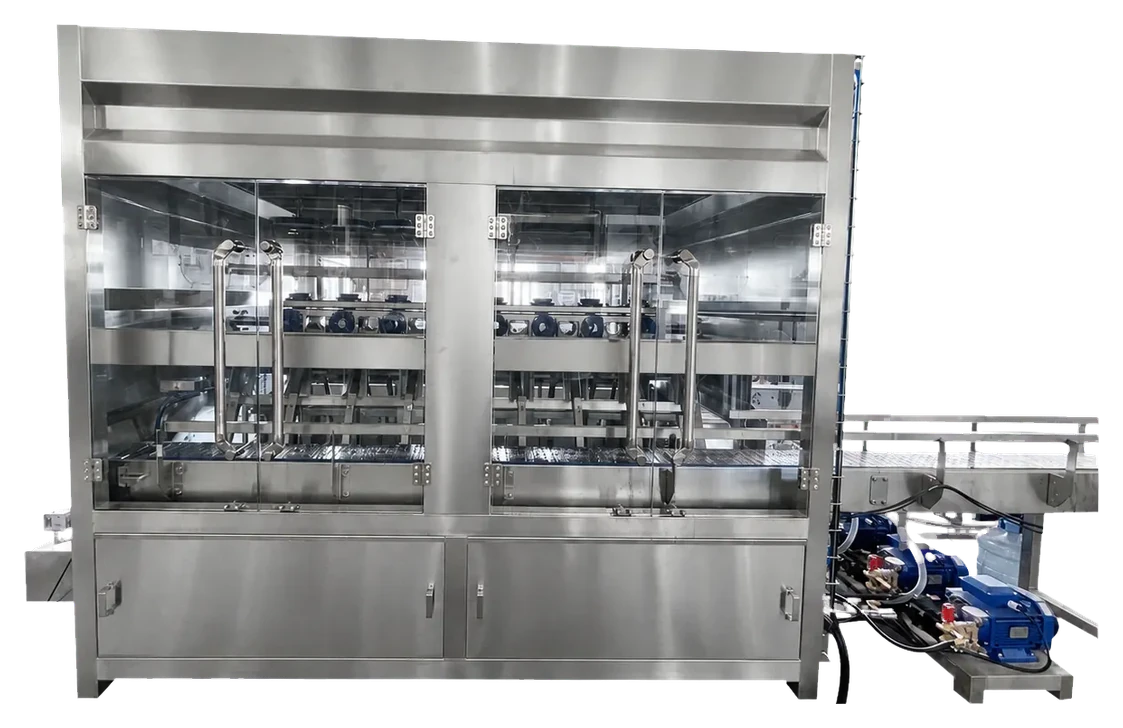
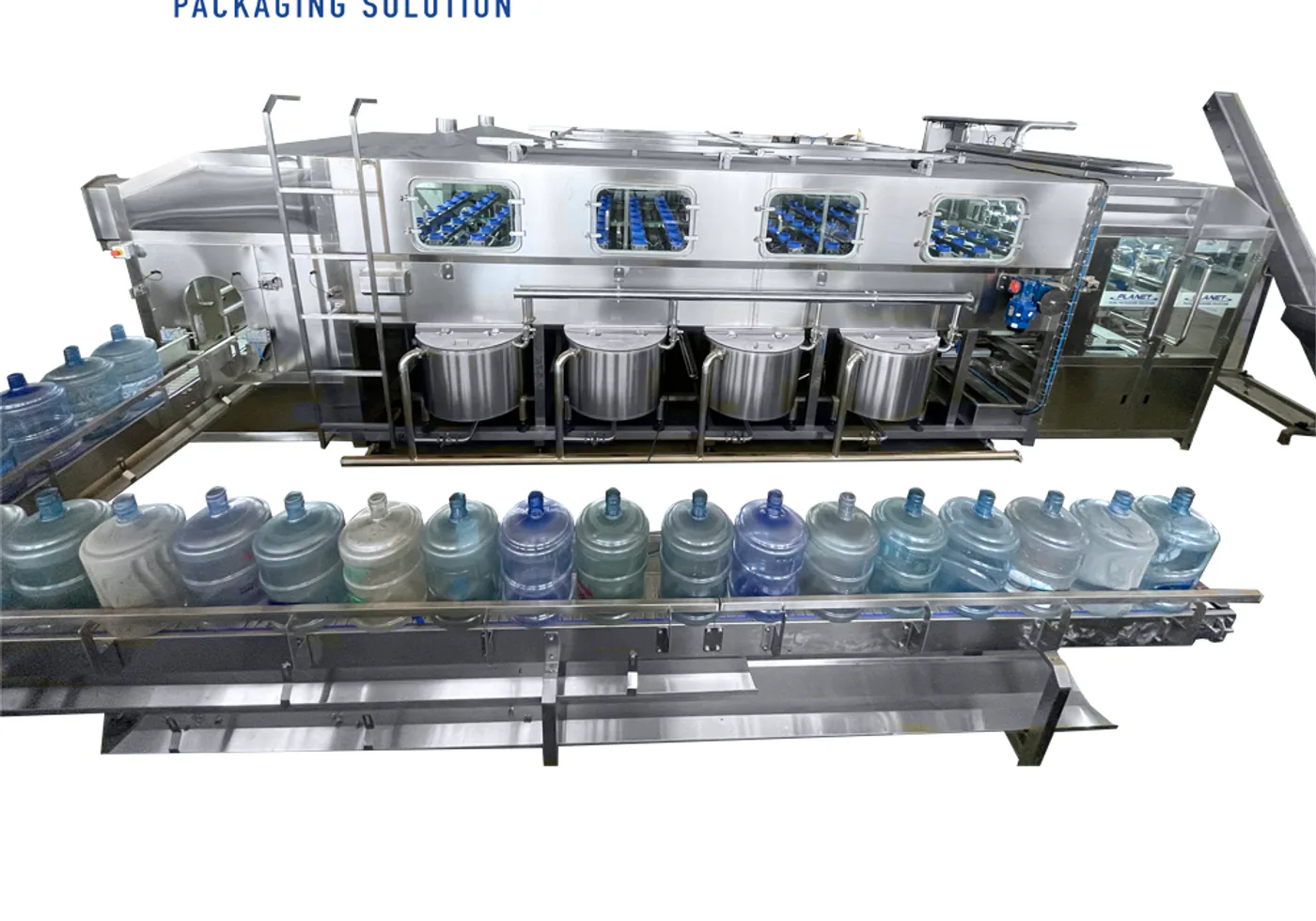
High-pressure pump internal washing machine
PLANET Company’s unique flat upper-and-lower structure avoids problems such as inaccurate upper gallon alignment, failure to lower the bottle, gallon jamming during inversion and loud noise.
04
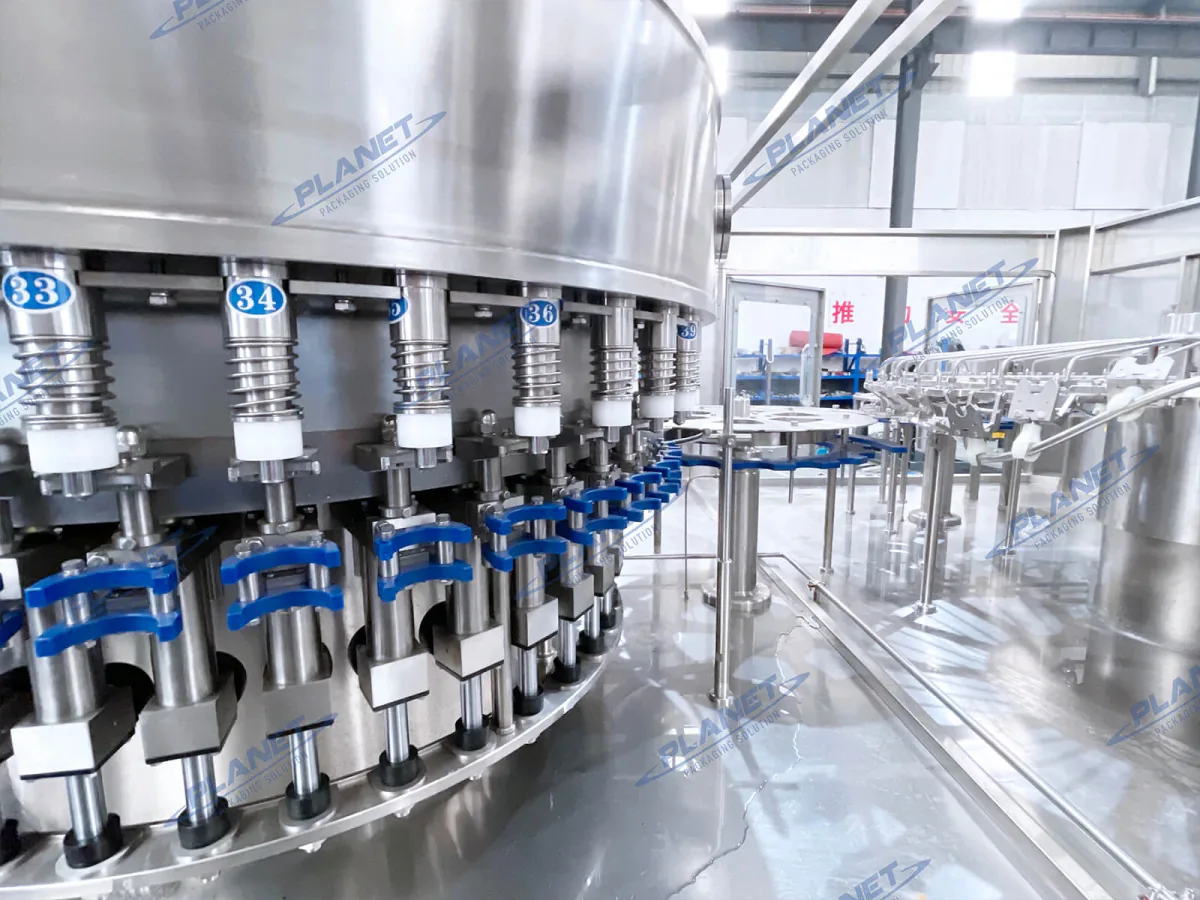
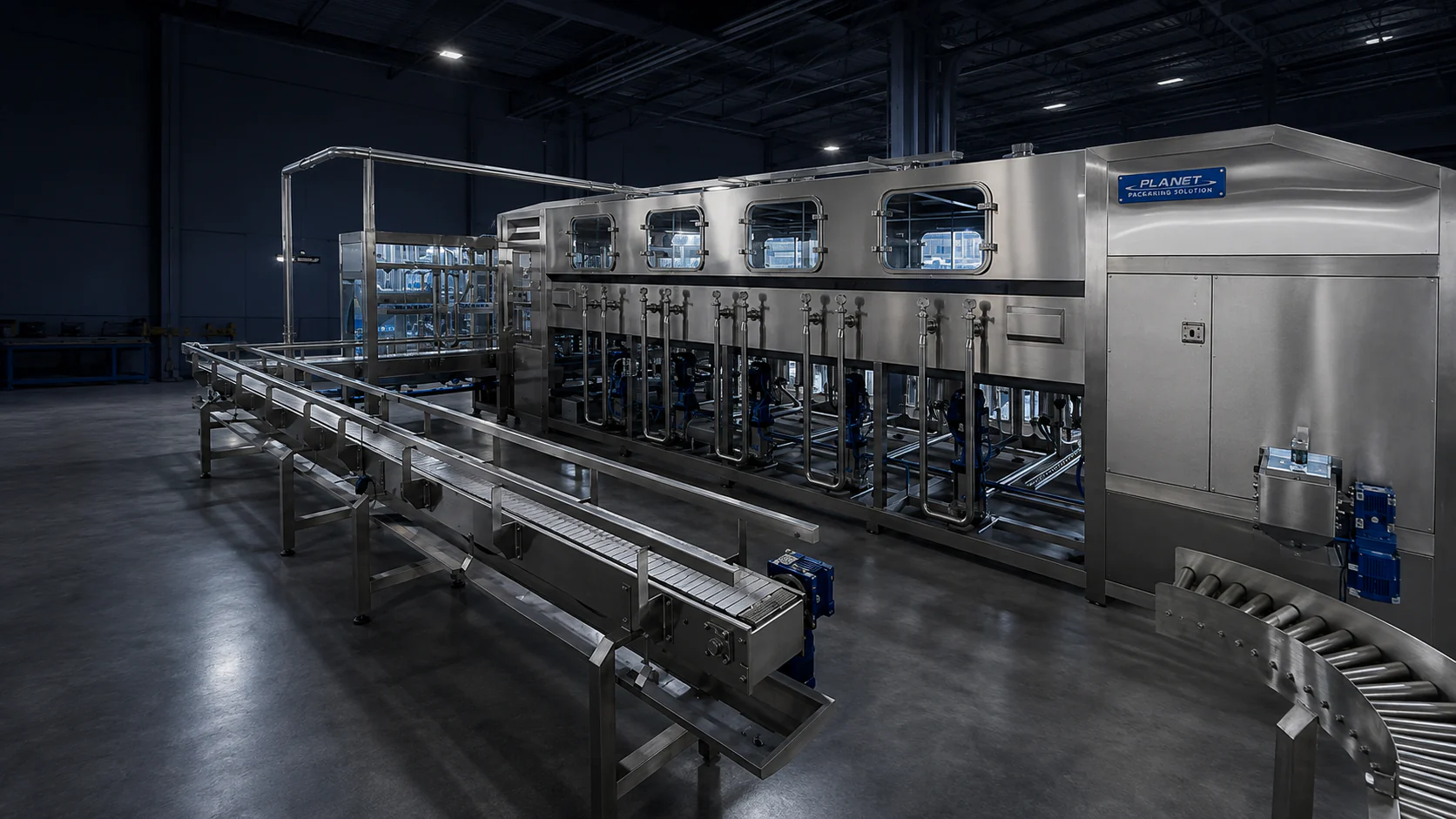
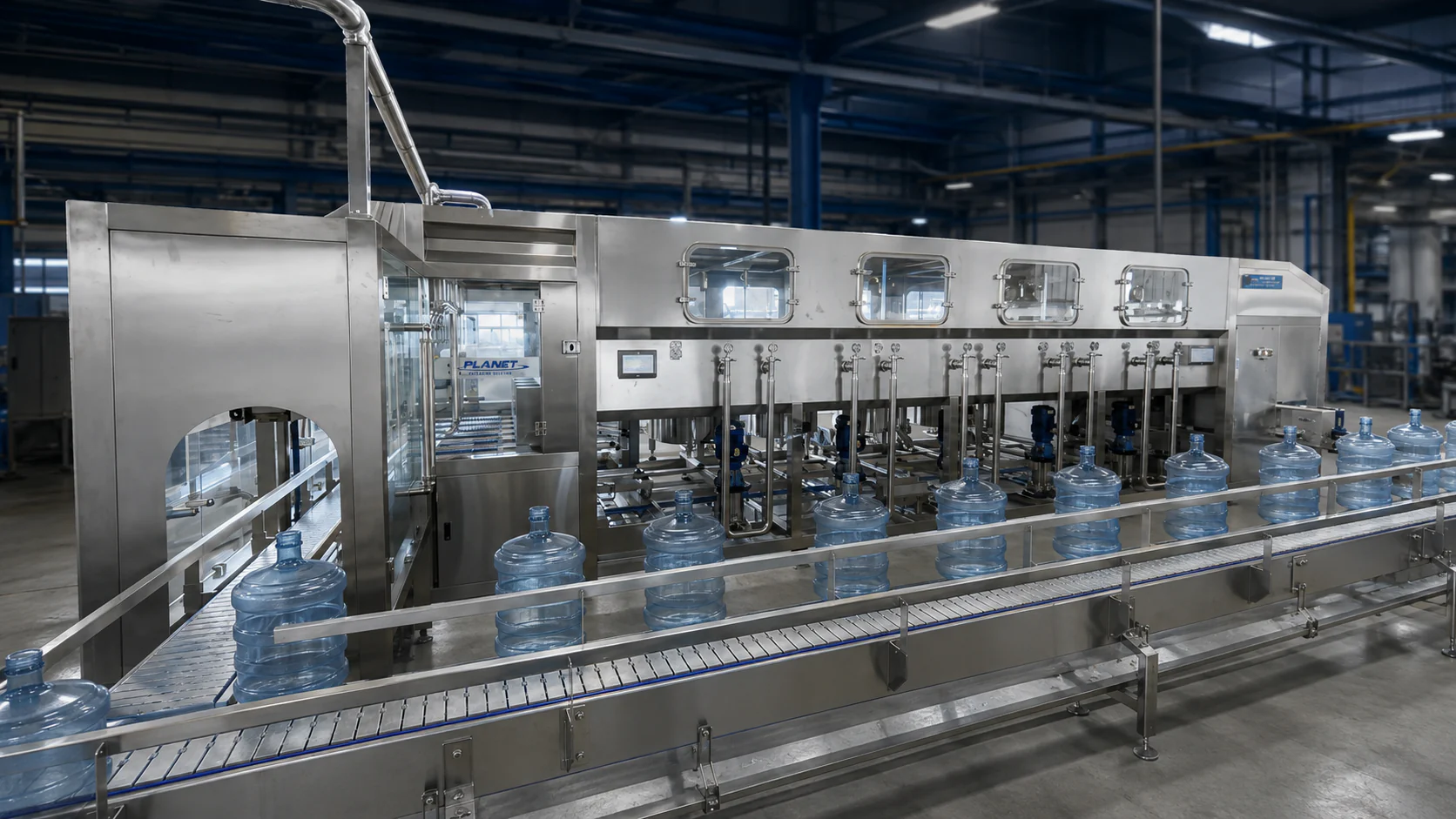
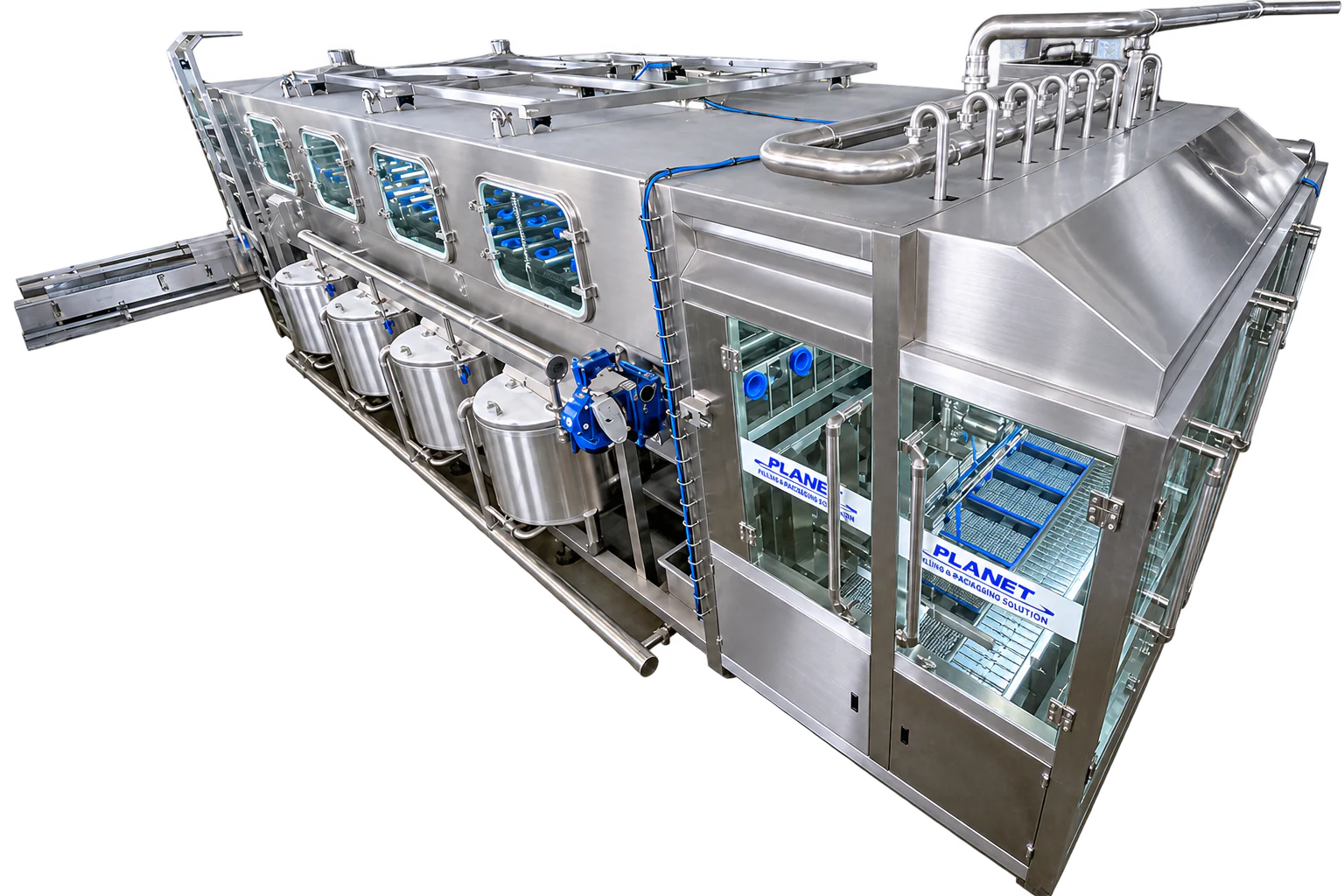
5-gallon washing, filling and capping 3-in-1
High-quality components, such as a CNP pump, Mitsubishi PLC and Siemens inverter. The reasonable design ensures stable operating performance. The adjustable filling level meets market requirements.
05
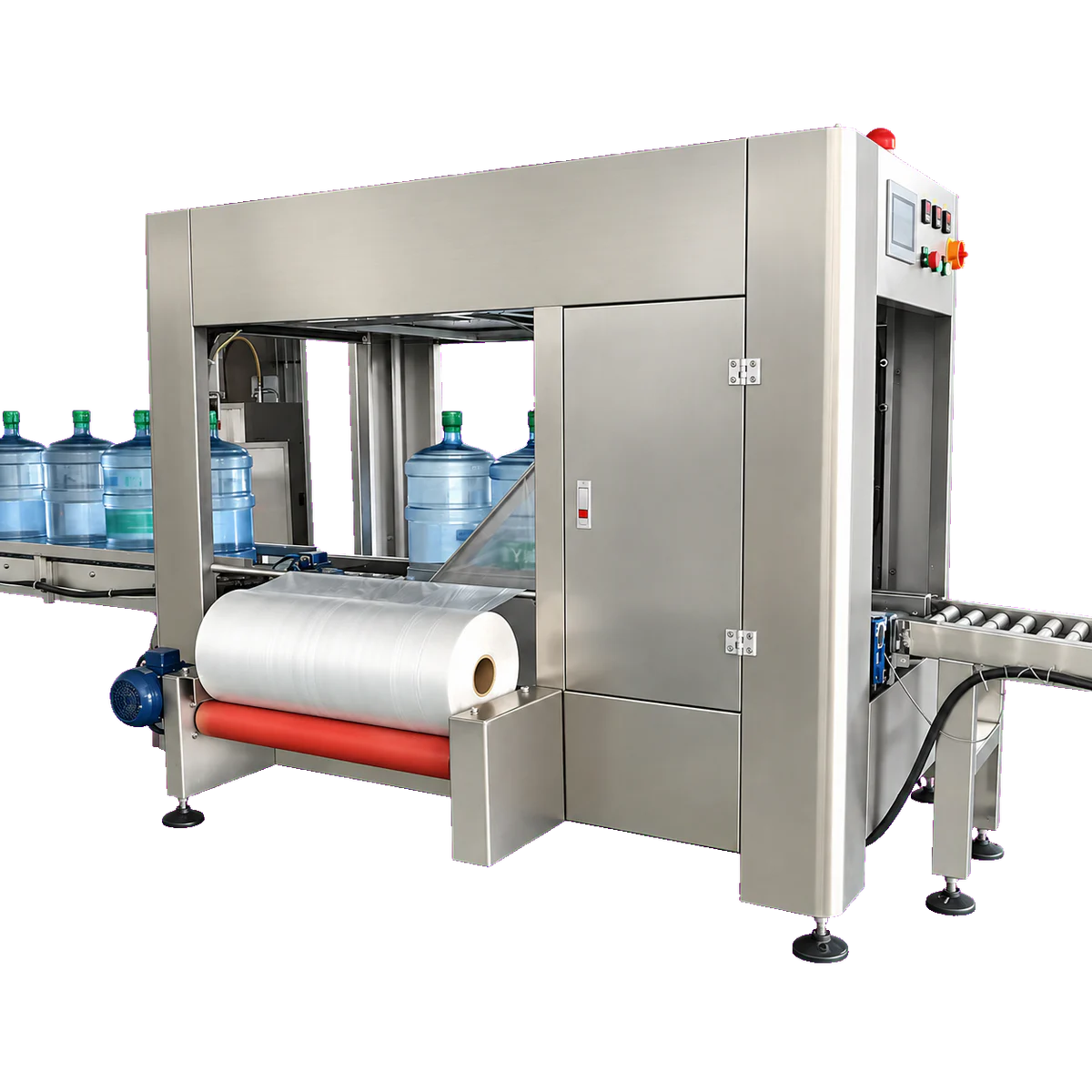
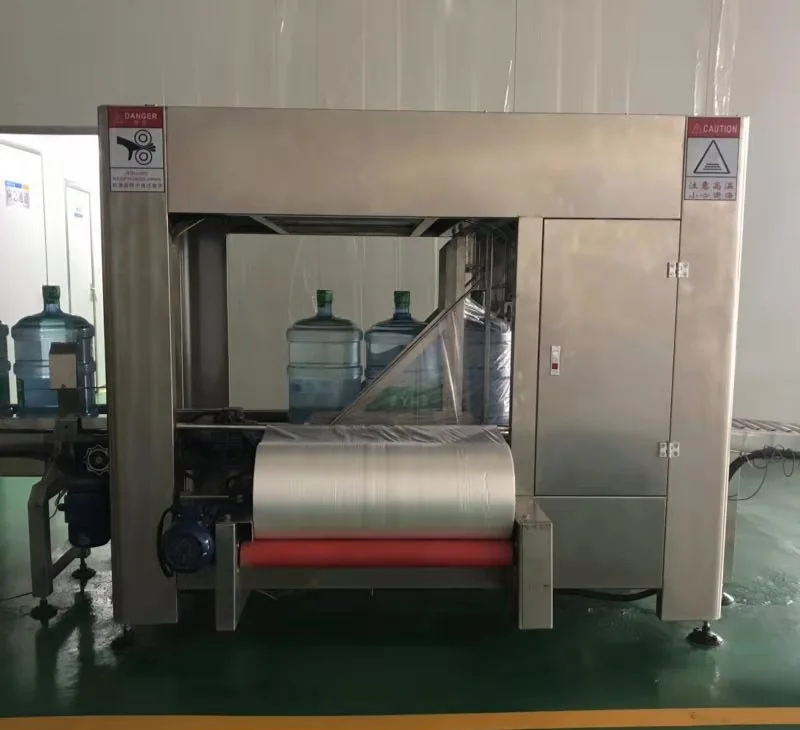
Bagging machine
The machine has a compact structure, high working efficiency, stable and reliable operation, and a high degree of automation. It uses a plastic bag to protect the gallon bottles.
06
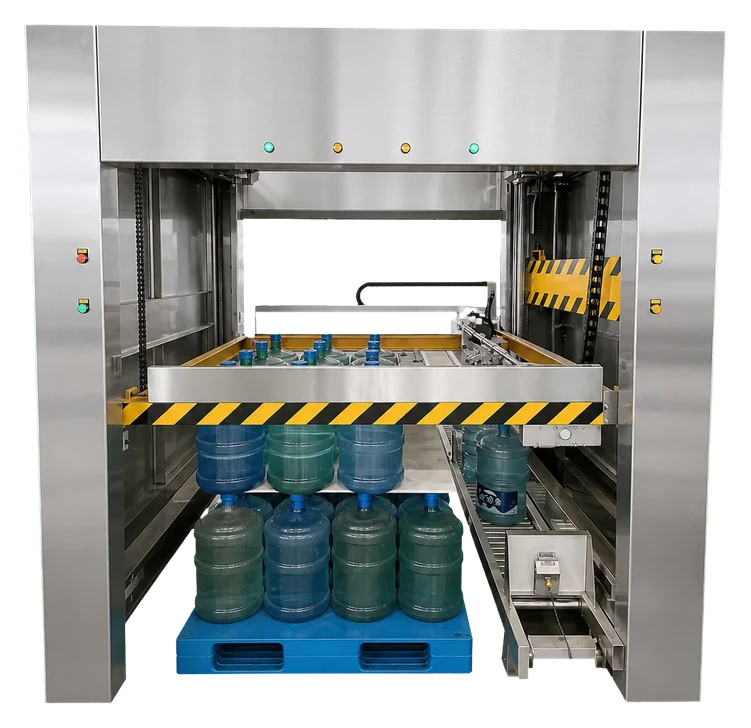
Gallon palletizer
This equipment integrates automatic gallon feeding and palletizing. The entire unit is made of high-quality 304 stainless steel, with a novel design, easy operation and precise positioning. It is the ideal equipment for reducing manual labor and energy consumption in a 5-gallon water factory.
Model selection
Select from bottle condition and cleaning duty.
Published model data has not yet been supplied. These confirmed inputs will determine washer length, filling configuration, utilities, footprint and staffing.
Configuration inputs, not unverified model claims
Selection inputWhat to provideStatus
Bottle condition
Age, damage, odor and contamination limits
Required
Container format
3–5 gallon bottle and neck drawings
Required
Nominal output
Saleable bottles per hour and shift plan
Required
Washing recipe
Chemical, temperature, contact time and rinse stages
To confirm
Closure and finish
Cap, label, sleeve, bag or handle requirement
To confirm
Plant conditions
Layout, drainage, utilities and operator plan
To confirm
Final output, utilities, footprint and operator count will be inserted only after the manufacturer specification table is approved.
Process
Follow one returnable bottle through six machines.
Hover or select a stage to review its equipment, control points and handoff to the next operation.
01Cap-label cutting and cap removal
1Bottle infeed2Label and cap removal3Prepared bottle
01Prepare
Cap-label cutting and cap removal
Remove the neck label and used cap before washing. The corrosion-resistant 304 stainless-steel structure can be configured with Airtac, Siemens or Schneider components.
Functions
Cut neck label · remove cap
Material
304 stainless steel
Controls
Airtac · Siemens · Schneider
02External bottle brushing
1Bottle infeed2Brush stations3Rinse discharge
02Brush
External bottle brushing
Wash the bottle body, shoulder and neck with rotating brushes and controlled spray before the intensive internal-cleaning stage.
Use the flat upper-and-lower transfer structure to align and invert each gallon bottle for high-pressure internal washing while reducing jamming and impact noise.
Functions
Align · invert · high-pressure wash
Transfer
Flat upper and lower structure
Control
Bottle positioning and discharge
04Washing, filling and capping 3-in-1
1Final washing2Filling station3Cap application
04Fill
Washing, filling and capping 3-in-1
Coordinate final washing, filling and capping in one protected machine with an adjustable filling level matched to the approved bottle and market requirement.
Technical terms and early purchasing decisions are collected here so the production route remains easy to follow.
How is the washing specification determined?
Start with the incoming bottle-condition standard, likely contaminants, local hygiene requirements and the approved cleaning chemicals. These inputs define washing stages, contact time, temperature, recovery and final-rinse duty.
Can one line handle both 3-gallon and 5-gallon bottles?
It may be possible when the bottle and neck drawings are compatible with the guides, carriers and filling station. Both samples must be reviewed before change parts and changeover time can be confirmed.
How is nominal output calculated?
Use required saleable bottles per shift, available production hours and realistic line efficiency. Washing residence time and the slowest connected machine must be included, not only the filler rating.
What incoming bottles should be rejected?
Cracked, strongly deformed, heavily contaminated or odorous bottles normally require rejection. The exact acceptance standard should be documented by the operator before the line configuration is finalized.
Which utilities are important?
The project normally requires product water, washing water, drainage, electricity and compressed air. Heated or chemical washing may add hot-water, steam and dosing requirements.
Can bagging and palletizing be automated?
Yes. The downstream route can include inspection, sleeve or bag application, conveyors and pallet handling, selected from output, labor plan and distribution method.
Line inquiry
Plan your returnable-bottle line.
Share bottle samples or drawings, incoming condition, washing target, cap, required output and available plant utilities.
Bottle Water Output
Request a line proposalProject details sent to the engineering team
Inquiry received.
Our engineering team will follow up with the next configuration questions.

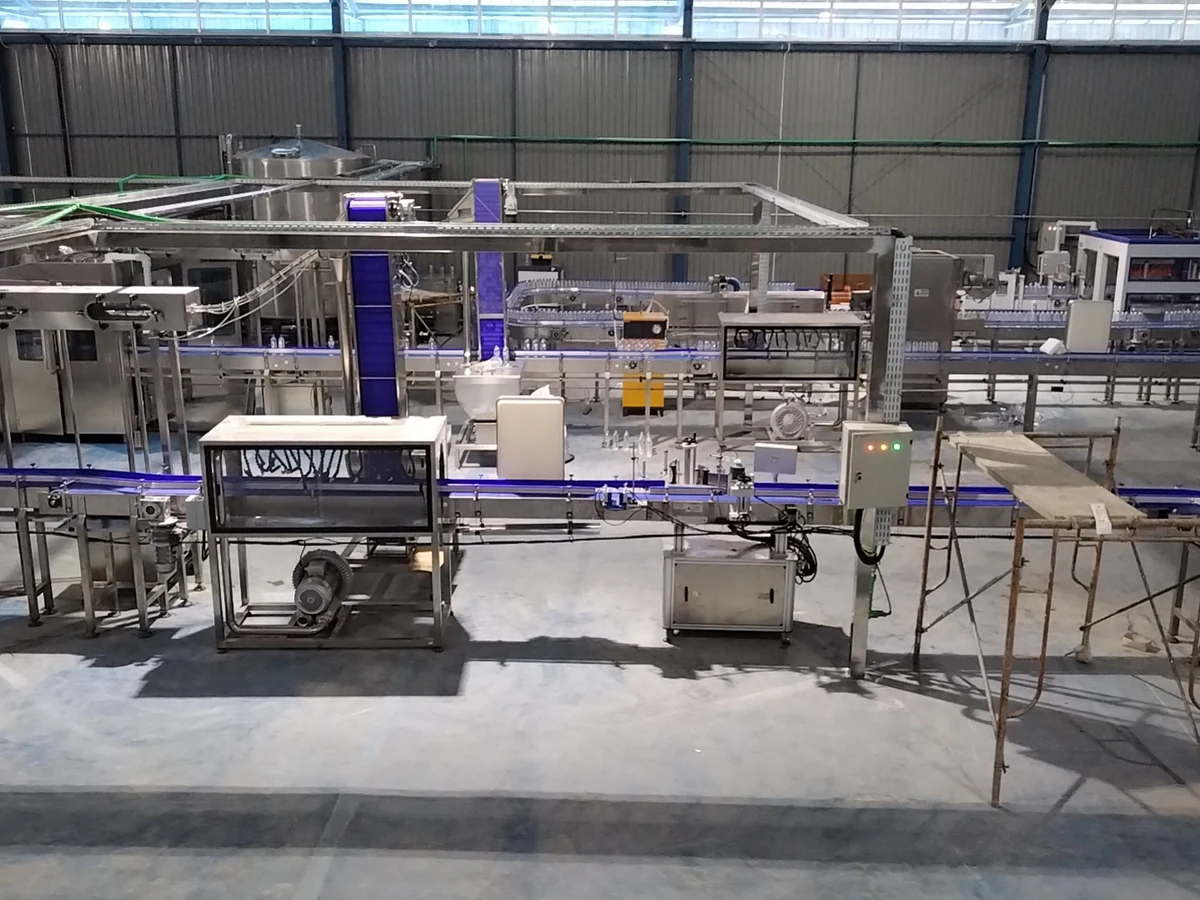 Delivered project
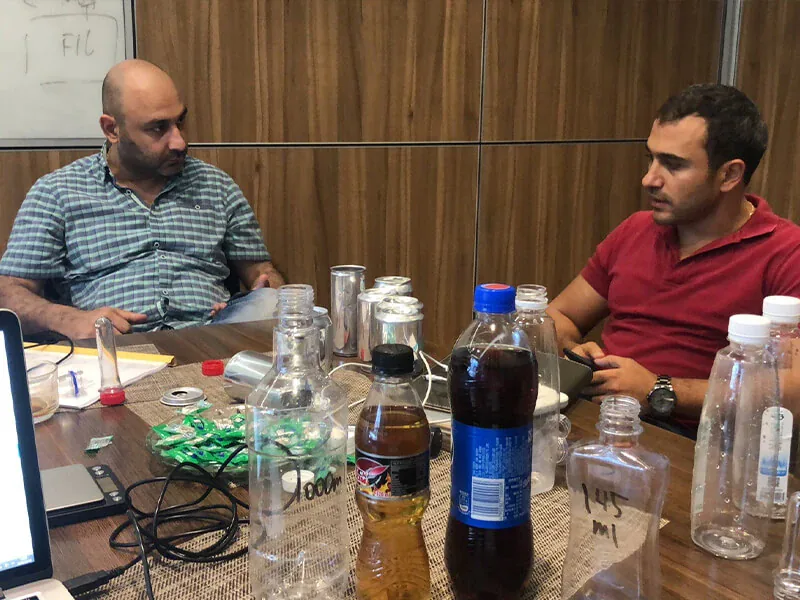
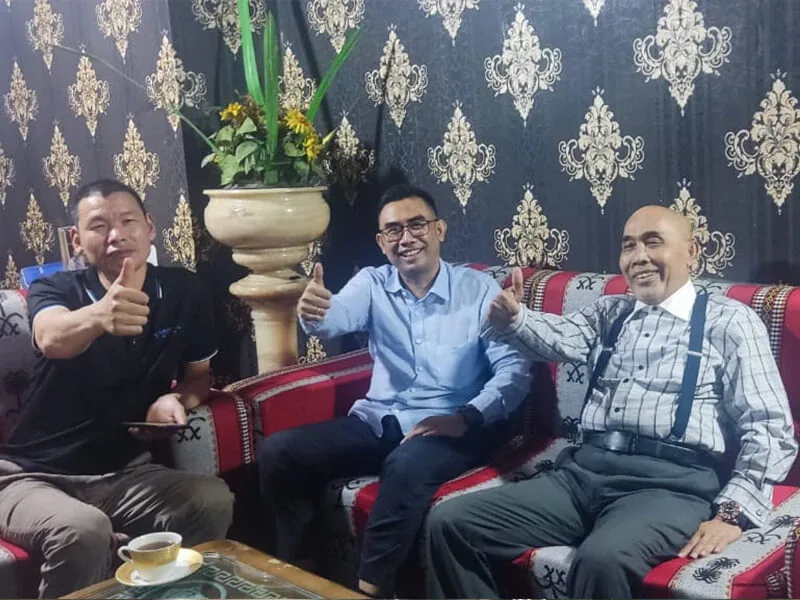 Project discussionCustomer team · Indonesia